
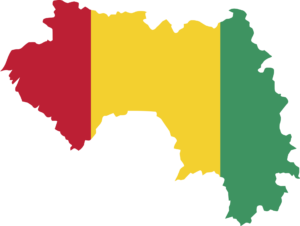
The company registration process in Guinea involves several key institutions. These include the Guichet Unique de Formalisation des Entreprises (GUFE), the Tax Authority, and the National Social Security Fund.
You’ll need to submit a complete set of documents including identification for all stakeholders, company statutes (in French), proof of address, and notarized forms related to company structure and purpose.
A new company registration in Guinea typically takes 7 to 9 weeks, depending on the legal structure selected and the responsiveness of involved institutions.
The timeline may extend slightly for public limited companies (SA) or branch offices, which often require more complex documentation and higher levels of authorization.
Select the most suitable legal entity based on your business needs.
A SARL is preferred for small and medium-sized enterprises due to its flexibility and lack of minimum capital, functionally equivalent to a limited liability company (LLC) in other jurisdictions.
An SA is more appropriate for large-scale operations and may require over US$14,000 in share capital.
Choose a unique company name and ensure it is available for registration.
Then draft the company statutes and articles of association in French, in accordance with OHADA standards. These documents define the business purpose, governance, and shareholder structure.
All core documents must be notarized and legalized. If prepared abroad, legalization may need to be done through an embassy or consulate.
This step ensures that all records are officially valid under Guinean and international law.me and ensure it is available for registration.
Then draft the company statutes and articles of association in French, in accordance with OHADA standards. These documents define the business purpose, governance, and shareholder structure.
Submit your full application to GUFE, the one-stop center responsible for coordinating the incorporation process. GUFE handles the registration with the Commercial Registry, Tax Office, and other key authorities.
Once your company is officially registered, apply for a Tax Identification Number (NIF). You must also register for corporate income tax, VAT, and any other applicable fiscal obligations through the Direction Nationale des Impôts.
Present your incorporation documents, tax ID, and identification to a local bank to open a business bank account.
This account is required for capital deposits, transactions, and fulfilling financial compliance in Guinea.
If you plan to hire staff, register with the National Social Security Fund (CNSS). Depending on your industry, you may also need to obtain special permits or licenses, particularly in regulated sectors like mining, telecom, or finance.
Opening a business bank account in Guinea typically takes up to five weeks, depending on the bank and the documentation submitted.
Most banks require company registration certificates, proof of address, and identification documents for directors and shareholders.
While major banks are present in Conakry, service quality and processing speed may vary. It's advisable to engage with a bank familiar with handling foreign-owned entities.
Guinea operates under a controlled currency regime, with the Guinean franc (GNF) as the official currency.
While capital repatriation is permitted, it must comply with central bank regulations and prior approvals may be required.
Foreign exchange transactions must be justified with supporting documents, and cross-border payments may involve additional scrutiny from both local banks and regulatory authorities.


Guinea is exceptionally rich in natural resources, particularly in minerals. It holds more than 25% of the world’s known bauxite reserves, as well as vast deposits of gold, diamonds, and iron ore.
The mining sector is the backbone of Guinea’s economy, attracting billions in investment and creating business opportunities not only in extraction but also in logistics, construction, and services.
Entrepreneurs entering the market can tap into a wide range of value chain opportunities, from equipment leasing to infrastructure development and environmental management.
As a member of OHADA, Guinea applies a uniform set of business laws that cover incorporation, accounting standards, insolvency, and more.
This framework brings predictability and legal security to companies operating in Guinea and across the region. It also simplifies cross-border transactions and partnerships.
For businesses with regional or international ambitions, OHADA membership provides a solid legal foundation for growth throughout Francophone Africa.
Entrepreneurs can incorporate a SARL (Société à Responsabilité Limitée) in Guinea with no mandatory minimum capital.
This significantly lowers the barrier to entry, especially for startups and small businesses.
It also provides operational agility, allowing companies to allocate resources where they matter most from day one.
Guinea’s vast deposits of bauxite, gold, and iron ore present major opportunities for direct and indirect investment. The mining industry continues to drive infrastructure development, logistics, and energy needs.
By incorporating locally, businesses can position themselves at the core of West Africa’s natural resource supply chain.
As part of the OHADA legal system, Guinea provides a harmonized business law environment that promotes transparency and reduces legal risk.
This is especially valuable for companies operating in multiple African countries.
It also simplifies procedures such as company registration, dispute resolution, and accounting standards, ensuring a more predictable business environment.
Guinea’s location along the Atlantic coast and its membership in ECOWAS (Economic Community of West African States) offers companies access to a wider regional market.
Businesses incorporated in Guinea can leverage trade routes and regional agreements to expand into neighboring countries with ease.
The Guinean government has introduced reforms to streamline the company registration process, improve access to finance, and modernize tax administration.
These efforts reflect a strong commitment to private sector development, making Guinea an increasingly attractive destination for international entrepreneurs and investors.
French is the official language in Guinea, which can present challenges for English-speaking founders during legal, tax, or administrative procedures.
Many official documents, government portals, and service providers operate solely in French, requiring translation or local assistance for smooth execution.
While digitalization is progressing, online company registration in Guinea is still limited. Most filings and approvals must be done in person or via a local agent.
This can slow down timelines and make remote incorporation more complex for foreign investors.
Opening a corporate bank account can take several weeks and often requires multiple visits and extensive documentation.
Foreign founders may also encounter strict compliance checks and delays in fund transfers, especially when dealing with international banking partners.
Understanding the local regulatory environment is essential.
Business incorporation involves coordination with several government bodies, such as the Trade and Personal Property Credit Register (TPPCR) and tax authorities.
Without local insight, delays or missteps in paperwork can lead to registration setbacks or additional costs.
While Guinea has a growing talent pool, certain technical roles, especially in legal, financial, or specialized engineering fields, may be harder to fill locally.
Foreign companies often need to bring in key personnel or invest in training to meet operational standards.
Despite significant improvements, some regions in Guinea still face infrastructure limitations, particularly in transport and energy.
These factors can affect supply chains and distribution, especially for companies operating outside of major cities like Conakry. Planning with local logistics partners is essential for efficiency.

Guinea is strategically positioned in West Africa, offering access to regional markets and international trade routes. Its economy is steadily growing, with reforms aimed at improving the business climate and attracting foreign investment.
Entrepreneurs benefit from low barriers to entry, especially for private limited companies, and a simplified registration process under the OHADA framework.
English-speaking investors will find that French is the official language, and local assistance is often key to navigating formalities.
Guinea has maintained an average GDP growth of 5–6% over the last few years, driven by mining, agriculture, and infrastructure development. Inflation is relatively stable, and the Guinean franc (GNF) is the official currency. The government continues to invest in roads, energy, and telecommunications to support economic activity. Foreign direct investment is encouraged, particularly in bauxite, gold, and iron ore, which make up a significant portion of exports. Guinea ranks as one of the world’s largest exporters of bauxite.
The corporate income tax rate is 25%, and VAT is charged at a standard rate of 18%. Tax incentives may be available for investors in strategic sectors such as mining, energy, and agro-industry. Guinea’s legal system is based on civil law and follows the OHADA framework, with recent reforms aligning with global principles such as OECD tax policy to enhance investor confidence and regulatory transparency. This legal harmonization provides consistency, reduces administrative complexity, and increases investor confidence, especially for companies operating in multiple African jurisdictions.
The corporate income tax rate is 25%, with VAT applied at a standard rate of 18% on goods and services. There may also be sector-specific levies or local taxes depending on your industry and business location.
Certain tax incentives exist for companies in priority sectors, such as mining, agriculture, and renewable energy. However, these must be applied for and approved by the relevant authorities.
Companies are required to maintain accurate financial records and submit annual returns in accordance with OHADA accounting standards.
These reports are typically filed in French and must be prepared by a certified accountant.
Employers must register with the National Social Security Fund and comply with payroll tax regulations, including monthly contributions and withholding tax obligations for employee salaries.


Business in Guinea tends to follow a formal and hierarchical structure, particularly when dealing with government institutions.
Appointments, official documentation, and punctuality are taken seriously in professional contexts.
Regulatory processes may involve multiple layers of approval, making it essential to understand local protocols and administrative expectations when engaging with public offices.
Establishing trusted relationships is a cornerstone of business success in Guinea.
Local advisors not only help navigate legal and cultural nuances but also act as key intermediaries with authorities and service providers.
Investing time in building rapport and long-term partnerships can accelerate approvals, improve negotiations, and reduce operational friction in unfamiliar environments.

Yes, foreign investors can fully own a company in Guinea. There are no restrictions on foreign shareholding, and both individuals and corporate entities can act as shareholders or directors.
This openness makes Guinea an attractive destination for entrepreneurs seeking full operational control and long-term growth opportunities.
No, there is no legal requirement to appoint a local partner or director. A company can be entirely foreign-owned and managed by non-residents, whether as individuals or legal entities.
However, partnering with a local advisor or representative can help navigate bureaucracy and improve communication with authorities.
Certain industries require regulatory approvals or sector-specific licenses, particularly those considered strategic or sensitive. These include mining, telecommunications, financial services, and energy.
Businesses in these areas must apply for permits through the relevant government ministries prior to beginning operations.
The typical timeline for company registration in Guinea is between 7 and 9 weeks, depending on the entity type and completeness of documentation.
Additional time may be required for opening a bank account, registering for taxes, or securing specific business licenses.
Guinean companies are subject to a 25% corporate income tax and an 18% VAT on goods and services. Other potential taxes include payroll contributions, local levies, and sector-specific duties.
Understanding your tax obligations early on is key to maintaining compliance and avoiding unnecessary penalties.

Let C2Z Advisory guide your next international move with cross-border expertise, practical execution and personalised support.
We specialize in company formation, bank account opening, tax and accounting compliance, and regulatory advisory across 80+ countries.
Our typical client is a sophisticated businessperson or corporate executive responsible for managing entities across multiple jurisdictions. These clients often have complex international structures and limited time to devote to the day-to-day administrative and compliance tasks. They value a centralized approach and seek to avoid dealing with multiple contacts or receiving fragmented instructions from different providers. By working with C2Z Advisory, they benefit from a single point of contact, extended global knowledge and coordinated support that simplifies their global operations.
No, maintaining physical offices in each location is not a cost-effective solution. C2Z Advisory strategic model allows us to offer cost-effective solutions to our clients without compromising on quality. In today’s digital world, the vast majority of our work is conducted remotely, so we work with our long-lasting trusted local partners to be our boots on-the-ground wherever needed—without the overhead of permanent offices.
Contact us for a free consultation. We’ll assess your needs, propose suitable structures, and send a step-by-step proposal.