
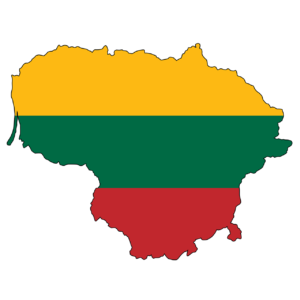
The company registration process in Lithuania is managed primarily by the Centre of Registers, with additional steps involving tax authorities, banks, and Sodra, the social insurance institution.
While most tasks can be completed online, coordination with multiple institutions ensures legal compliance and operational readiness.
Digital infrastructure allows for efficient processing, but timing may vary depending on the complexity of the business and shareholder residency.
For a standard private limited company (UAB) with all documents prepared, incorporation can be completed in 2 to 5 business days.
Additional time may be required to open a corporate bank account, register for VAT, or secure licenses for regulated activities.
Foreign founders should allow extra time for translations, apostilles, and remote identification, if applicable.
Most foreign entrepreneurs opt for a private limited liability company (UAB), equivalent to an LLC, due to its flexibility, low capital requirement (as little as €2,500), and limited liability structure.
Alternative forms include public limited companies, branches, or representative offices, depending on your operational goals.
Founders must draft and notarize the articles of association, choose a unique company name, and prepare the act of incorporation or founding agreement.
The name must be verified for availability through the Centre of Registers to avoid conflicts with existing entities.
The registration process is conducted through Lithuania’s electronic registration system, which allows for document submission and payment of state fees.
Once approved, the company receives a registration certificate, a unique company code, and is officially listed in the Lithuanian Register of Legal Entities.
A temporary bank account must be opened to deposit the required share capital. After registration, it is converted into a full operational business account.
This step may require personal identification or local representation, depending on the bank and residency of shareholders.
If your company’s revenue is expected to exceed €45,000 annually, or if you plan to do business with EU partners, you must register for VAT with the State Tax Inspectorate.
Other tax registrations, such as for corporate income tax and payroll contributions, may also be required depending on the business activity.
If the company plans to hire employees, it must register with Sodra, Lithuania’s social insurance authority, before any contracts begin.
This ensures compliance with employee benefits, health insurance, and pension obligations, which are mandatory for employers.
Once registered and tax-compliant, the company can start operations. Founders must ensure ongoing compliance with accounting, employment, and reporting requirements.
It’s advisable to work with local legal and financial advisors to stay updated with regulatory changes and avoid penalties.
This full process reflects a well-structured yet flexible framework, making Lithuania an attractive base for efficient and compliant business incorporation.
Opening a business bank account in Lithuania is a required step for most company structures and is essential for handling share capital, taxes, and daily operations.
While the process is generally straightforward, non-resident founders may face additional identity verification and compliance checks.
Having a clear business plan and local presence, such as a registered office, helps streamline the account opening process with traditional banks.
Lithuania is one of Europe's leading hubs for fintech innovation, and this is reflected in its progressive digital banking ecosystem.
Several institutions now offer remote onboarding, multi-currency accounts, and integration with modern payment platforms, particularly appealing to tech-focused businesses.
The country’s regulatory environment actively supports financial innovation, making it easier for startups to access modern financial services.


Being a full member of the European Union, Lithuania grants businesses unrestricted access to the EU single market. This makes it easier to trade goods, hire talent, and expand operations across Europe.
The country is also recognized for its cutting-edge digital infrastructure. It supports online company registration, digital signatures, and remote shareholder participation, making it ideal for entrepreneurs managing businesses from abroad.
Lithuania has built a reputation as a forward-thinking, innovation-driven economy. Government policies actively support R&D, fintech, and startup growth through grants, tax incentives, and simplified licensing procedures.
Vilnius, the capital, is a rising hub for tech companies and digital-first entrepreneurs, supported by incubators, accelerators, and access to EU innovation programs.
This commitment to fostering innovation makes Lithuania a fertile ground for launching and scaling new business models in Europe.
Lithuania offers a streamlined, digital-first approach to business incorporation. Most companies can be registered entirely online, often in as little as 2 to 5 business days.
The process is supported by a secure electronic signature system, allowing international founders to register remotely without physical presence or excessive paperwork.
This efficiency reduces both time and administrative burden, enabling faster entry into the market and quicker access to operational activities.
One of the standout benefits for entrepreneurs is Lithuania’s competitive corporate tax structure. While the standard rate is 15%, small companies may qualify for a reduced 5% rate, depending on revenue and staffing.
These favorable conditions are designed to encourage growth and reinvestment, especially for startups and lean operations entering the European market.
Such tax incentives make Lithuania a smart base for both local growth and international expansion.
As a full member of the European Union, Lithuania provides seamless access to the EU’s single market, eliminating barriers to trade, services, and capital across 27 countries.
Businesses incorporated in Lithuania benefit from mutual recognition of standards, simplified cross-border logistics, and eligibility for EU funding programs.
This level of integration is especially valuable for companies with global ambitions seeking to operate across Europe under a single legal and tax structure.
Lithuania is recognized as one of Europe’s most digitally developed public sectors. Services like tax reporting, licensing, and company updates are available through user-friendly online platforms.
Entrepreneurs can access e-government tools 24/7, streamlining compliance and reducing the need for local intermediaries.
This digital infrastructure supports seamless operations, particularly for remote teams and digital nomads managing cross-border businesses.
Lithuania has become a European leader in fintech and digital innovation, hosting more than 250 licensed fintech firms. The ecosystem benefits from regulatory support, technical talent, and a cooperative environment.
The Bank of Lithuania actively promotes sandbox environments for financial products, while the startup scene is supported by accelerators, R&D grants, and access to EU innovation funds.
This environment is ideal for founders looking to test, launch, and scale tech-driven solutions in a stable yet progressive market.
Lithuania offers accessible immigration pathways for non-EU entrepreneurs, including startup visas, residence permits for company directors, and options for key employees.
These policies are designed to attract high-potential founders and investors, providing legal residency based on business plans, funding, or incorporation.
With a welcoming approach to international talent, Lithuania positions itself as a gateway for global entrepreneurs entering Europe.
Although Lithuania offers a transparent legal system, navigating company law, taxation rules, and corporate governance requirements can be overwhelming for first-time founders.
Interpreting legal terms, choosing the right company structure, and ensuring compliance with EU and local regulations often requires expert guidance to avoid costly missteps.
Foreign founders may face delays or additional documentation requirements when opening a business bank account in Lithuania, especially if they are not EU residents.
Banks often request personal identification, business plans, and proof of local operations, which can be time-consuming without local representation or familiarity with the system.
Digital banking options are expanding, but traditional banks still dominate, especially for companies needing more complex financial services.
In some cases, having a local director or business address is required to meet compliance and banking criteria, even if registration is allowed remotely.
This can pose a challenge for entrepreneurs who want to operate fully online, or who do not have immediate access to local partners or infrastructure.
Understanding the difference between legal presence and operational substance is key to avoiding administrative or regulatory issues later.
While English is widely spoken in business settings, many official documents and procedures are still in Lithuanian, including company bylaws, contracts, and government forms.
This can create delays or misunderstandings during the registration process, especially when dealing with banks, tax authorities, or notaries.
Hiring a bilingual advisor or translation support can significantly ease these hurdles and improve accuracy in communication.
Although the headline corporate tax rate is low, the broader tax framework includes social contributions, VAT registration, and dividend taxation, which may vary based on business type and residency.
Foreign founders often underestimate the complexity of ongoing tax obligations, which include monthly filings and local reporting standards.
Getting professional advice early on helps ensure accurate planning and risk management as the business scales.
From legal advisors and accountants to HR and payroll providers, selecting the right local service partners is critical for smooth operations.
However, quality and responsiveness can vary, and many founders struggle to assess providers without personal recommendations or local insights.
Establishing trusted relationships early helps build a foundation for long-term growth and reduces the friction of managing operations from abroad.

Lithuania is one of the fastest-growing economies in the Baltic region. It offers a stable macroeconomic environment, a highly educated population, and consistent GDP growth. With a population of around 2.8 million and strong international trade ties, the country maintains a strategic balance between economic agility and policy stability. Lithuania is ranked highly in the World Bank’s Ease of Doing Business Index, reinforcing its reputation as a practical and efficient destination for company formation.
One of Lithuania’s strongest assets is its attractive corporate tax structure. The standard corporate income tax rate is 15%, among the lowest in the EU. Small companies may benefit from a reduced 5% tax rate, depending on specific criteria, and dividend payments to non-residents are often exempt under EU directives or bilateral treaties. The legal framework is aligned with EU legislation and OECD tax policy, offering both clarity and consistency for foreign investors. All company types operate under the Civil Code and Law on Companies, ensuring transparent rules across industries.
Lithuania has a standard corporate income tax rate of 15%, with a preferential 5% rate available for qualifying small companies under specific conditions.
Dividend withholding tax is typically 15%, though this may be reduced or eliminated under double tax treaties or EU parent-subsidiary directives.
Proper tax planning can help optimize profit distribution and support long-term financial efficiency.
All Lithuanian companies must maintain accurate financial records and submit annual financial statements. These must comply with local accounting standards or IFRS for larger entities.
VAT registration is mandatory once turnover exceeds €45,000, and VAT returns are typically filed monthly.
Timely and correct reporting is critical, especially for businesses aiming to build credibility with investors, banks, and tax authorities.


Lithuanian professionals value clear, direct communication that is respectful and goal-oriented. Meetings are typically structured and efficient, with a strong focus on outcomes.
Punctuality, preparation, and professionalism are expected at all levels. Decision-making can be formal and hierarchical, especially in larger organizations.
It’s advisable to present proposals with well-documented facts and a clear business rationale, as Lithuanians appreciate logic and transparency in negotiations.
Business interactions often begin with a firm handshake and formal titles, particularly in initial meetings. While the culture is increasingly international, showing respect for local customs builds trust.
Written communication should be polite, concise, and well-structured. It's common to follow up meetings with summaries and action points by email.
Dress code is typically business formal, though some sectors, especially tech, may lean toward smart casual. Professional appearance is generally seen as a sign of seriousness and credibility.

Yes. Non-residents can fully own and manage a Lithuanian company. There are no nationality restrictions on shareholders or directors.
Some practical steps, such as opening a bank account or signing documents, may require additional identification or local representation.
Yes, the process can be completed entirely online, provided you have access to a qualified electronic signature accepted in Lithuania.
This makes it possible to register a company remotely without physical presence, streamlining the process for international founders.
The minimum share capital for a private limited company (UAB) is €2,500. This must be deposited into a corporate bank account before registration is finalized.
Some fast-track options or shelf companies may offer temporary capital waivers, depending on the setup.
A standard incorporation takes between 2 to 5 business days once documents are in order and the application is submitted.
Additional steps, such as VAT registration or opening a bank account, may take a few extra days, particularly for non-residents.
Absolutely. Lithuania is a leading European hub for fintech and digital assets, supported by a forward-thinking regulatory framework.
The country offers fast licensing, open banking APIs, and regulatory sandboxes, making it an ideal base for innovative financial ventures.

Let C2Z Advisory guide your next international move with cross-border expertise, practical execution and personalised support.
We specialize in company formation, bank account opening, tax and accounting compliance, and regulatory advisory across 80+ countries.
Our typical client is a sophisticated businessperson or corporate executive responsible for managing entities across multiple jurisdictions. These clients often have complex international structures and limited time to devote to the day-to-day administrative and compliance tasks. They value a centralized approach and seek to avoid dealing with multiple contacts or receiving fragmented instructions from different providers. By working with C2Z Advisory, they benefit from a single point of contact, extended global knowledge and coordinated support that simplifies their global operations.
No, maintaining physical offices in each location is not a cost-effective solution. C2Z Advisory strategic model allows us to offer cost-effective solutions to our clients without compromising on quality. In today’s digital world, the vast majority of our work is conducted remotely, so we work with our long-lasting trusted local partners to be our boots on-the-ground wherever needed—without the overhead of permanent offices.
Contact us for a free consultation. We’ll assess your needs, propose suitable structures, and send a step-by-step proposal.